How the Packers Make Different Plays Look the Same Before the Snap
Green Bay’s last three completed games show a clear pattern: the offense keeps showing the same run-friendly picture, then answers with different outcomes after the snap.
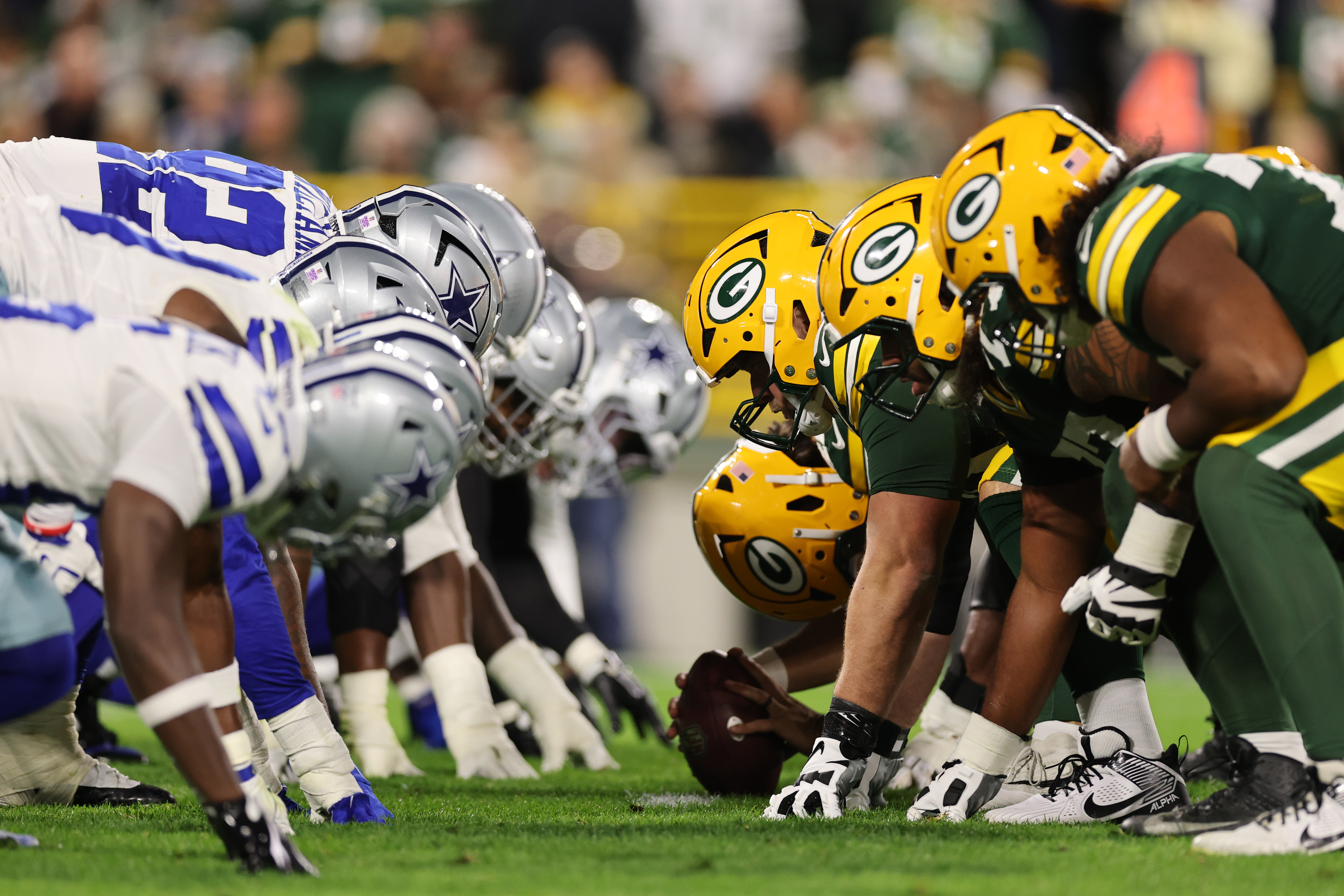
The look stays familiar, the answer changes
The Packers’ last three completed games point to a simple but useful offensive trait: Green Bay keeps showing defenses a run-capable picture early in drives, then makes the payoff come from somewhere else. That pattern showed up in the Week 5 win over Chicago, the Week 6 win over Dallas, and even in the less tidy Week 4 win over Tampa Bay, where the offense still had to work through a lot of traffic before the game settled. The common thread is not one magic formation. It is the way the same surface picture can lead to different results once the ball is snapped. [1] [2] [3]
That matters because pre-snap football is a sorting game. If the offense can make a defense see a believable run setup, the defense has to choose how quickly to react. Green Bay’s recent drives show that same setup can turn into a screen, a quarterback sneak look, a standard run, or a downfield play-action throw. We cannot assign every defender a job from the box score alone, but the sequence of plays itself tells us the Packers are asking defenses to hold their water before they know what the snap will become. [1] [2]
Chicago: the opening drive turned one picture into three answers
The cleanest example came against Chicago. Green Bay opened on its own 9-yard line and marched 91 yards to a touchdown on the first possession. The official drive account says the series began with a flea flicker that turned into a Tucker Kraft tight end screen for 13 yards, then moved through runs and a third-down conversion before Kraft picked up two yards on a third-and-1 sneak. On the next snap, Jordan Love connected with Christian Watson for a 42-yard play-action touchdown. [1]
For fans watching before the snap, the key was not that the Packers kept tricking the Bears with a different formation every time. It was the opposite. Green Bay stayed within an early-drive structure that looked trustworthy as a run-first series, then changed the outcome after the defense had already been forced to respect multiple possible answers. The official report confirms the sequence and the score, but it does not let us claim exactly which defender was fooled or how any one assignment broke down. [1]
Dallas: the same kind of drive produced a different finish
One week later, the Packers used a similar script against Dallas, only with a different final snap. The official recap says Green Bay went 90 yards in 14 plays and opened with a touchdown drive that mixed running plays and completions before ending on a 9-yard touchdown to Matthew Golden. That possession also produced 109 passing yards from Love, which the team noted was the most by any NFL quarterback on an opening drive since 2019. [2]
That drive is the best proof that the disguise is not a one-off trick. The Packers again made the first possession look methodical and balanced enough to force the defense to treat run and pass as live options on the same series. The finish was different from the Chicago opener, but the underlying stress was the same: Green Bay kept the defense inside a long, ambiguous drive until the offense could cash it in. The official game story supports the drive length, the scoring play and the historical note, but not a claim that one specific pre-snap look caused the touchdown. [2]
Tampa Bay shows the limitation and the warning sign
The Tampa Bay game is useful because it shows that the structure alone does not guarantee clean results. Green Bay won 17-14, but the official recap says the offense had two chances to create more separation in the fourth quarter and both drives ended in turnovers in scoring territory. That same report also points to 10 penalties, many on offense, which helps explain why the game never got comfortable. [3]
That is the right counterweight to the Chicago and Dallas examples. The Packers can create the kind of pre-snap uncertainty that opens lanes and windows, but the offense still has to finish the play. When penalties and turnovers enter the picture, the same general approach can stall out instead of producing explosives. So the evidence supports a real offensive mechanism, not a guarantee of success. [3]
What to watch next
The most useful pattern for fans to track in the next game is whether Green Bay again uses an early-drive run look to set up the first true play-action shot. If the offense opens with a tight, balanced series that includes a run, a short screen or a direct-snap wrinkle, and then follows it with a deep throw off that same look, that will be another strong sign of the same pre-snap strategy at work. The last two wins give us the clearest verified version of that formula, while the Tampa game shows why execution still decides whether the disguise becomes points. [1] [2] [3]
Sources and further reading
Reporting and context used for this article:
FAN FEED
Join the discussion
What do you think? Share your take with fellow Packers fans.
Loading the discussion…
Related stories
Packers’ Tight End Plan Looks Built for Patience, Not Panic
Tucker Kraft’s return is the headline, but Green Bay’s real story is how the Packers have insulated the position around him.